News

Serbia
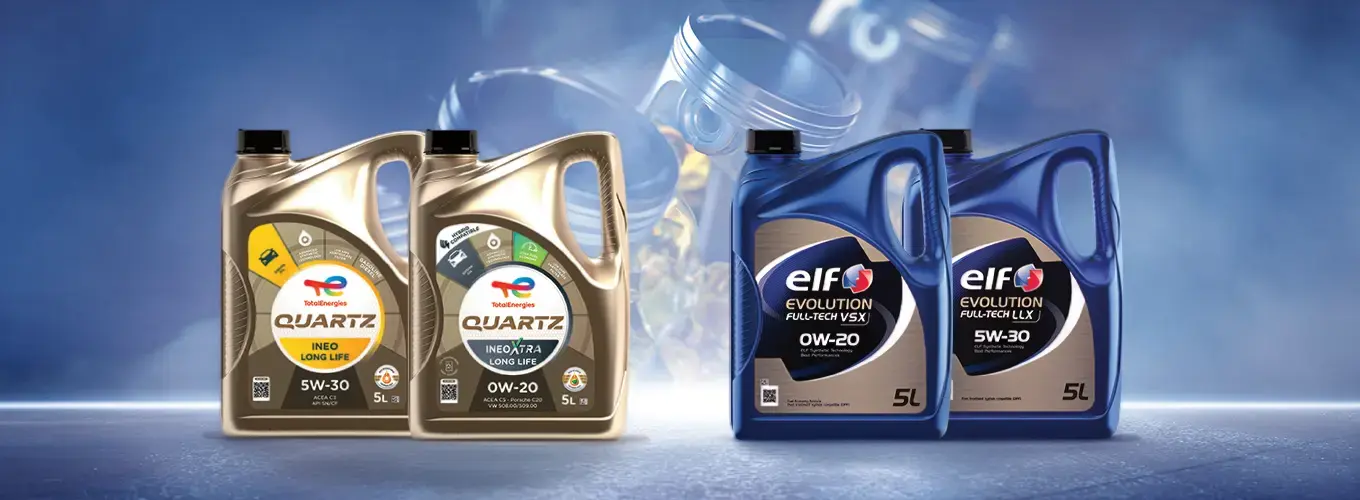
Codes such as VW 504 00/507 00, BMW LL-04 or MB-Approval 229.52 are more than just technical designations. They indicate that a specific engine oil has undergone a process defined by the vehicle manufacturer and received its official approval.
0
+
years of German OEM approvals for Quartz and ELF
* Quartz and ELF have a history of official approvals from German vehicle manufacturers spanning more than two decades.
0
approved OEM specifications for MB, BMW and VW
* Selected Quartz and ELF engine oils have official approvals for at least 12 different OEM specifications from Mercedes-Benz, BMW and the Volkswagen Group.
0
%
share of German cars in the vehicle fleet
* The estimated share of Volkswagen, Mercedes-Benz, BMW, Audi and Škoda passenger car brands in 2026 exceeds 35% across the markets of Serbia, Croatia and Slovenia.
When choosing an engine oil, car owners often start with the brand and viscosity grade, such as 5W-30 or 0W-20. These are important pieces of information, but they do not provide the complete answer as to whether an oil is approved for a particular engine.
Modern vehicle manufacturers develop their own engine oil specifications, linked to engine design, its lubrication system, emissions-reduction technologies and the prescribed maintenance requirements. An oil submitted for official approval must meet the requirements of the specific specification.
That is why an OEM approval is not a marketing claim but the result of a formal technical validation process.
OEM stands for Original Equipment Manufacturer — in this case, the vehicle manufacturer. In the context of engine oils, an OEM defines the technical specifications that an oil needs to meet for specific engines and technologies.
Quartz and ELF for German vehicle brands
The TotalEnergies passenger car range includes Quartz and ELF engine oils with official approvals from Volkswagen, BMW and Mercedes-Benz, as well as VW approvals relevant to Škoda and Audi models whose service documentation specifies the corresponding Volkswagen Group specification.

When a Quartz or ELF product carries the exact official approval specified by the vehicle manufacturer in the service documentation, the driver does not have to base the decision on brand reputation, habit or someone else’s recommendation. The vehicle manufacturer has confirmed the product’s technical validation against that specification through its own approval process.

Engine oil is not a product that can be considered separately from the engine. The way the oil circulates, the pressure it needs to maintain, the temperatures it is exposed to and the materials it comes into contact with are linked to the design of the powertrain.
As new generations of engines are developed, the requirements placed on engine oil also change. Turbochargers, direct injection, variable valve timing systems, particulate filters, as well as the drive towards lower fuel consumption and emissions, increase the number of tasks a lubricant needs to perform.
| Manufacturer | Specific Approval | Quartz | ELF |
|---|---|---|---|
| BMW | BMW LL-04 | TotalEnergies Quartz Ineo Long Life 0W-30 TotalEnergies Quartz Ineo Long Life 5W-30 TotalEnergies Quartz Ineo MC3 5W-30 TotalEnergies Quartz Ineo FGO 5W-40 TotalEnergies Quartz Ineo Efficiency 0W-30 | ELF Evolution Full-Tech LLX 0W-30 ELF Evolution Full-Tech LLX 5W-30 |
| BMW | BMW LL-19FE | TotalEnergies Quartz Ineo Efficiency 0W-30 | |
| Ford | Ford WSS-M2C956-A1 | TotalEnergies Quartz Ineo Xtra Long Life 0W-20 | ELF Evolution Full-Tech VSX 0W-20 |
| Mercedes-Benz | MB-Approval 229.52 | TotalEnergies Quartz Ineo DID 5W-30 TotalEnergies Quartz Ineo Long Life 0W-30 TotalEnergies Quartz Ineo Long Life 5W-30 TotalEnergies Quartz Ineo MC3 5W-30 TotalEnergies Quartz Ineo FGO 5W-40 | ELF Evolution Full-Tech DID 5W-30 ELF Evolution Full-Tech LLX 0W-30 ELF Evolution Full-Tech LLX 5W-30 ELF Evolution Full-Tech RPX 5W-30 |
| Mercedes-Benz | MB-Approval 229.51 | TotalEnergies Quartz Ineo C3 5W-40 TotalEnergies Quartz Ineo Long Life 5W-30 TotalEnergies Quartz Ineo MC3 5W-30 | ELF Evolution Full-Tech LLX 5W-30 ELF Evolution Full-Tech LSX 5W-40 |
| Mercedes-Benz | MB-Approval 229.31 | TotalEnergies Quartz Ineo Long Life 5W-30 | ELF Evolution Full-Tech LLX 5W-30 |
| Porsche | Porsche C20 | TotalEnergies Quartz Ineo Xtra Long Life 0W-20 | ELF Evolution Full-Tech VSX 0W-20 |
| Porsche | Porsche C30 | TotalEnergies Quartz Ineo Long Life 0W-30 TotalEnergies Quartz Ineo Long Life 5W-30 | ELF Evolution Full-Tech LLX 0W-30 ELF Evolution Full-Tech LLX 5W-30 |
| Porsche | Porsche A40 | TotalEnergies Quartz Ineo C3 5W-40 | ELF Evolution Full-Tech LSX 5W-40 |
| Porsche | Porsche C40 | TotalEnergies Quartz Ineo FGO 5W-40 | |
| Volkswagen | VW 508.00 / 509.00 | TotalEnergies Quartz Ineo Xtra Long Life 0W-20 | ELF Evolution Full-Tech VSX 0W-20 |
| Volkswagen | VW 504.00 / 507.00 | TotalEnergies Quartz Ineo Long Life 0W-30 TotalEnergies Quartz Ineo Long Life 5W-30 | ELF Evolution Full-Tech LLX 0W-30 ELF Evolution Full-Tech LLX 5W-30 |
| Volkswagen | VW 505.00 / 505.01 | TotalEnergies Quartz Ineo DID 5W-30 TotalEnergies Quartz Ineo C3 5W-40 | ELF Evolution Full-Tech DID 5W-30 ELF Evolution Full-Tech LSX 5W-40 |
| Volkswagen | VW 511.00 | TotalEnergies Quartz Ineo FGO 5W-40 |
How is an official OEM approval obtained?
The exact process may vary depending on the vehicle manufacturer. In general, the lubricant manufacturer develops a precisely defined formulation and then carries out the testing programme required by the specific OEM specification.
The results and technical documentation are then submitted in accordance with the vehicle manufacturer’s procedure. Only when the specific formulation meets the required criteria and successfully completes the prescribed process can it receive formal approval for a particular specification.
It is important to note that an official approval is not automatically granted to an entire engine oil brand but applies to a specific product and a specific manufacturer specification.
Drivers will, of course, not notice the result of an individual laboratory test while commuting to work or travelling on holiday. When an oil with the exact required approval is used, the vehicle manufacturer has formally confirmed that the formulation is approved for the applications covered by that specification. Depending on the specific OEM standard, this means that factors important to the oil’s in-service performance have been evaluated.
-

Protection against wear
Even at extreme loads and temperatures, the oil needs to provide the required protection and stability throughout the period of use specified by the OEM. -

Engine cleanliness
The formulation needs to control oxidation, deposits and sludge formation that could affect component operation and oil flow. -

Low-temperature performance
The oil needs to circulate quickly enough and reach critical components after a cold engine start. -

Protection of emissions-control systems
In engines equipped with particulate filters, the oil’s composition must meet the requirements of the relevant system and OEM specification.
A specific oil for a specific engine
The correct viscosity and formulation are important for maintaining the engine’s designed characteristics, particularly for systems whose operation depends on proper oil flow, pressure and behaviour at different temperatures.
Therefore, oils with official OEM approvals are not “alternative” oils compared with some assumed default choice. From a technical perspective, the key point is that the specific oil has the appropriate, valid approval required for the specific engine.
That is why, when choosing an oil, the first step is to check the designation specified in the vehicle’s service documentation and then verify whether the same designation is listed among the official approvals of the specific oil.
-

QUARTZ INEO LONG LIFE 5W-30
-

QUARTZ INEO C3 5W-40
-

QUARTZ INEO MC3 5W-30
-

ELF EVOLUTION FULL-TECH LLX 5W-30
Consult LubAdvisor for recommendations on oils and fluids for your vehicle, find more detailed technical information in the product catalogue, or contact us with any questions, suggestions, or feedback.